
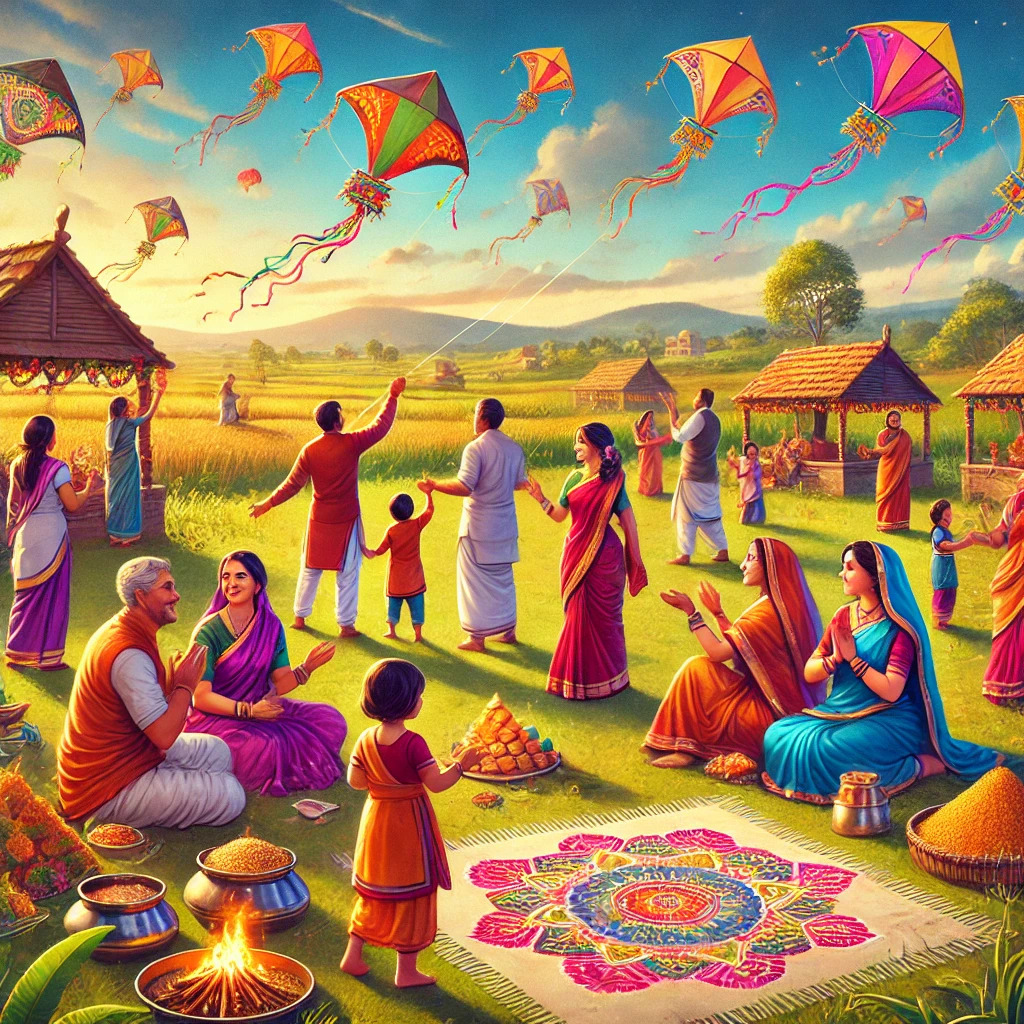
Makara Sankranti, celebrated with great enthusiasm across India, falls on January 14th this year. This blog post will provide everything you need to know about this significant festival.
Sankranti marks a pivotal moment in the celestial calendar—the transition of the Sun into Capricorn (Makara Rashi). This transition signifies the Sun’s northward journey (Uttarayana), symbolizing hope, renewal, and the promise of brighter days.
The festival also heralds the end of winter and the beginning of longer days, offering relief from the chill and anticipation for a fresh season. Traditionally linked with the agricultural cycle, Makara Sankranti embodies gratitude for the harvest and the blessings of nature.
Deity Worshipped
The central focus of Makara Sankranti is Surya Deva (the Sun God), who is revered as the ultimate source of energy, light, and life. Devotees offer their prayers and perform rituals to seek health, prosperity, and the purification of the soul. The worship of Surya Deva reflects the festival’s deeper spiritual significance, aligning human life with the cosmic rhythms of nature. In certain regions of India, the celebrations include homage to Lord Vishnu and Goddess Lakshmi, emphasizing the themes of abundance, good fortune, and harmony. This regional variation enriches the cultural diversity of Makara Sankranti while maintaining its universal essence of gratitude and renewal.
Celebrations Across India
Makara Sankranti is celebrated under various names and with distinct customs, showcasing India’s vast cultural diversity:
North India:
- Lohri: In Punjab and Haryana, people celebrate with bonfires, folk songs, and feasts to mark the harvest of rabi crops.
- Kite flying is a significant activity in states like Delhi and Uttar Pradesh, symbolizing joy and unity.
South India:
Karnataka celebrates Makara Sankranti with unique customs and traditions that highlight the state’s agricultural and cultural significance:
- Ellu-Bella Tradition: Families exchange a sweet mixture of sesame seeds, jaggery, coconut, and peanuts, symbolizing goodwill and harmony.
- Sugarcane and Sweets: Homes are decorated with sugarcane stalks, and special sweets like yellu undae and sakkare achchu are distributed.
- Kichchu Haisuvudu: Farmers burn crop waste as an offering to Surya Dev, symbolizing renewal and gratitude.
- Community Bonding: Villages host fairs and cultural performances, with community feasts fostering unity and joy.
- Tamil Nadu celebrates this multi-day festival with the preparation of the dish Pongal, offerings to the Sun God, and traditional rituals.
- Andhra Pradesh and Telangana mark the festival with colorful rangolis, cattle decoration, and community feasts.
West India:
- Gujarat and Rajasthan: The sky fills with vibrant kites during Uttarayan, a major highlight of the festival in this region. Families participate in kite competitions while enjoying traditional sweets like til-gud.
East India:
- West Bengal: Ganga Sagar Mela is a prominent event where devotees take holy dips at the confluence of the Ganga and the Bay of Bengal, seeking spiritual purification.
- Assam: The festival is celebrated as Magh Bihu, involving feasts, bonfires, and cultural performances.
This regional diversity makes Makara Sankranti a festival that unites India while showcasing its rich cultural tapestry.
Significance of Makar Sankranti
Astronomical Importance
Makar Sankranti marks the Sun’s transition into the zodiac sign of Capricorn (Makara), signifying the start of its northward journey (Uttarayana). This shift is considered highly auspicious, symbolizing the movement toward light, positivity, and spiritual awakening. It also aligns with longer daylight hours, representing a time of growth and renewal.
Agricultural Significance
As a harvest festival, Makar Sankranti is deeply connected to India’s agricultural roots. It marks the end of the winter harvest season and the start of preparations for the next cycle. Farmers express gratitude for the bounty of crops and pray for prosperity in the coming year.
Cultural Traditions
Across India, the festival is celebrated with diverse cultural activities such as kite flying, bonfires, feasts, and folk performances. Special dishes made with sesame seeds (til) and jaggery (gur) are prepared, symbolizing unity, warmth, and sweetness in relationships.
The festival is a reminder of the importance of gratitude—for the Sun’s life-sustaining energy, for the harvests that feed communities, and for the bonds shared among family, friends, and neighbors. It’s also about renewal: a fresh start, as people take the opportunity to begin new ventures, resolutions, or spiritual practices. Finally, Makara Sankranti is a time for community, where people come together to celebrate life’s abundance.
How will you be celebrating Makara Sankranti 2025? Share your plans in the comments below let me know how you are observing this joyous occasion.

 Bliss-Girls
Leave a comment